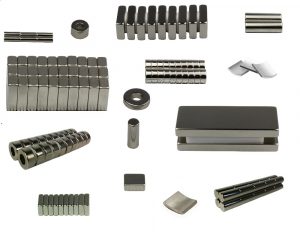
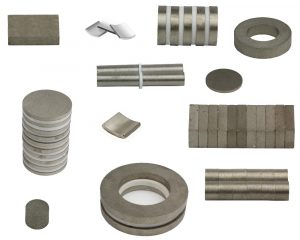
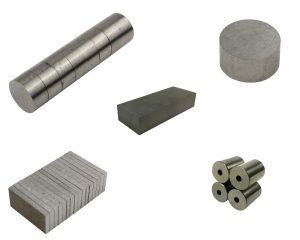
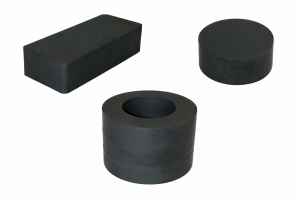
Permanent Magnets (NdFeB, SmCo, Hard Ferrite, Alnico, and Polymer-Bonded Magnets) NdFeB Magnets View Products Manufactured using powder metallurgy processes from Nd2Fe14BHigh resistance to demagnetizationHigh magnetic performance (Br, bHc, iHC and (BH)max)Excellent price-performance ratioModerate temperature resistanceBrittle and hardLow corrosion resistance; protective coating requiredNot suitable for high-temperature applications SmCo Magnets View Products Manufactured using powder metallurgy processes from SmCo₅ or Sm₂Co₁₇ alloysHigh resistance to demagnetizationExcellent corrosion resistanceOutstanding temperature stabilityRelatively expensive due to limited raw material availabilityBrittle and extremely hard Alnico Magnets View Products Manufactured by casting or powder metallurgy processesMetal alloy based on an Al-Ni-Fe-Co matrixExcellent temperature stability over a wide temperature range exceeding 500°C, with temperature coefficients of Br and iHc below ±0.03%High corrosion resistance without the need for a protective surface coatingGood resistance to demagnetization caused by vibration and shockGood magnetic flux density at a reasonable costBrittle and hard Hard Ferrite Magnets View Products Manufactured using powder metallurgy processes from barium ferrite (BaFe₁₂O₁₉) or strontium ferrite (SrFe₁₂O₁₉)Good resistance to demagnetizationExcellent corrosion resistanceCost-effective due to the abundant availability of raw materialsGood temperature stabilityHigh coercivity and high electrical resistivityThe most widely used type of permanent magnetBrittle and hard Ferrite Core & Soft Ferrite View Products Mn-Zn- and Ni-Zn-based soft ferrite materials Mn-Zn materials with medium to high permeability (approximately 2,000–15,000) Ni-Zn materials with comparatively low permeability (approximately 10–2,200) A wide variety of core shapes, including E, U, R, pot, PC, PQ, and drum cores Additional designs and variants available Custom ferrite cores and components manufactured to meet specific technical requirements